
Can DNA Predict Compatibility Between Donor and Recipient?
What does compatibility mean in donor selection?
The compatibility between a donor and a recipient is crucial for a successful match. In traditional matching methods, the decision relies heavily on the available medical history, physical characteristics, and personal preferences. These factors can often lead to numerous mismatches and disappointments, making the process long and stressful. Our unique DRom 1.0 algorithm analyses DNA to predict compatibility of MHC genes between a potential sperm donor and a recipient, making the donor selection process more transparent and efficient.
Comment fonctionne l'algorithme DRom 1.0 ?
Gene Pool's DRom 1.0 algorithm considers 100 single nucleotide polymorphism (SNP) markers positioned in key genes, referred to as the compatibility genes. These genes have been shown to play a critical role in successful conception and overall compatibility between donors and recipients. Research shows that individuals with matching or near-matching DNA markers have a higher chance of successful insemination. The DRom 1.0 algorithm matches donors and recipients based on similar DNA markers and predicts compatibility, supporting the efficiency of the donor-recipient matching process.
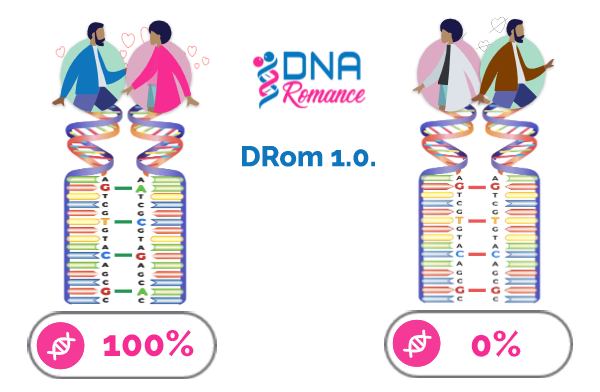
The DNA compatibility score lays a foundation for an effective sperm donor-recipient match, allowing individuals or couples to consider genetic factors involved in the conception of healthy offspring.